
Do Habits Exist? Part 2
Yes but sometimes they aren't what they think you are.
In my previous post, I discussed habits and shared some examples of a change in the habits of a particular setter I’m coaching. In case you’re not a superior human Premium Subscriber, here’s how the last post ended:
And here’s how we come back to habits. I think it’s a fair statement, in the colloquial use of the term, to say that, “the first montage shows a habit of setting off the back foot, while the second montage shows a habit of setting off a lead leg.” So in that sense, yes, I think habits do exist. But in terms of coaching this kid, that statement is somewhere between unhelpful and counterproductive. It’s like yelling at a hitter to “get your elbow up” when they are late. If they reached high for the ball, they would whiff. That’s why they dropped their elbow.
Broadly speaking, I don’t find speaking about dynamic actions in terms of habits very helpful. Because perception and action are coupled, the dynamic actions of the sport are determined by what you perceive. Trying to consciously override what your body has perceived as the best course of action is just as likely to hinder an athlete as it is to help them.
Here’s where the ideas of habits gets tricky. I referenced The Power Of Habit in the previous post, and I’ll come back to another concept from that book and that is the idea of Keystone Habits. To quote the linked piece:
We have habits everywhere in our lives, but certain routines — keystone habits — lead to a cascade of other actions because of them.
Many habits that we see on the volleyball court are going to be very difficult to change at the point of contact, because the athlete is now in position where what they see in front of them is going to strongly influence their body to move a certain way. The habits that I’m interested in changing are these volleyball Keystone Habits that strongly influence what athletes perceive, which will then change how they move.
Example: Ball-Setter-Ball-Hitter
BSBH is a drill that explicitly teaches a specific eyework sequence. It’s quite easy to imagine how changing your eye sequence changes what you see, and therefore, how you move. Players trained with a traditional GMS BSBH eye sequence tend to have a “hold and read” stance at the net, with often a very deliberate head turn to look at the setter.
Players trained with a different eye sequence might shift or move in different ways.
Obligatory: these clips aren’t quite apples to apples and there’s also different blocking schemes, etc, etc… I just had these 2 clips handy that I knew showed different middle blocking postures. The point that I’m making is that what you look at determines how you move. Keystone Habits are habits that influence a lot of other habits. Therefore, eye sequences might be good Keystone Habits. BSBH is a Keystone Habit.
And also, even when you train physical movements that you hope to become Keystone Habits, tying them in to the visual information that an athlete will see when performing these movements makes them much stronger.
Back To Setting
This fall I shared some parts of team systems that I teach, including how I like to teach setter release footwork. Setter release footwork is an odd skill that actually gets less important as you get more advanced. And now, given that pros can release on toss, rather than contact, it’s basically an irrelevant skill. But it’s still very important for coaches of young players to teach, because their environment demands it.
If you look at the video clips from the Part 1, there’s a lot of different “habits” that improved from the December examples to the February examples.
Clockwise or counter-clockwise turn.
Distance of release
“Strong release” (ex: getting to your spot before you start picking up visual information from the passer vs getting stuck halfway and changing your release based on information from the passer before you get to your spot)
Setting off lead leg v setting back-footed
Any one of these could be habits that you find more or less important. I don’t want to get into too much of that just yet, because those are actually the secondary considerations. The point is that if you want some of that stuff to happen, you have to address stuff that happens earlier in the chain.
I shared this video of a Rotation 1 release of a player that I coached that I consider to be just right:
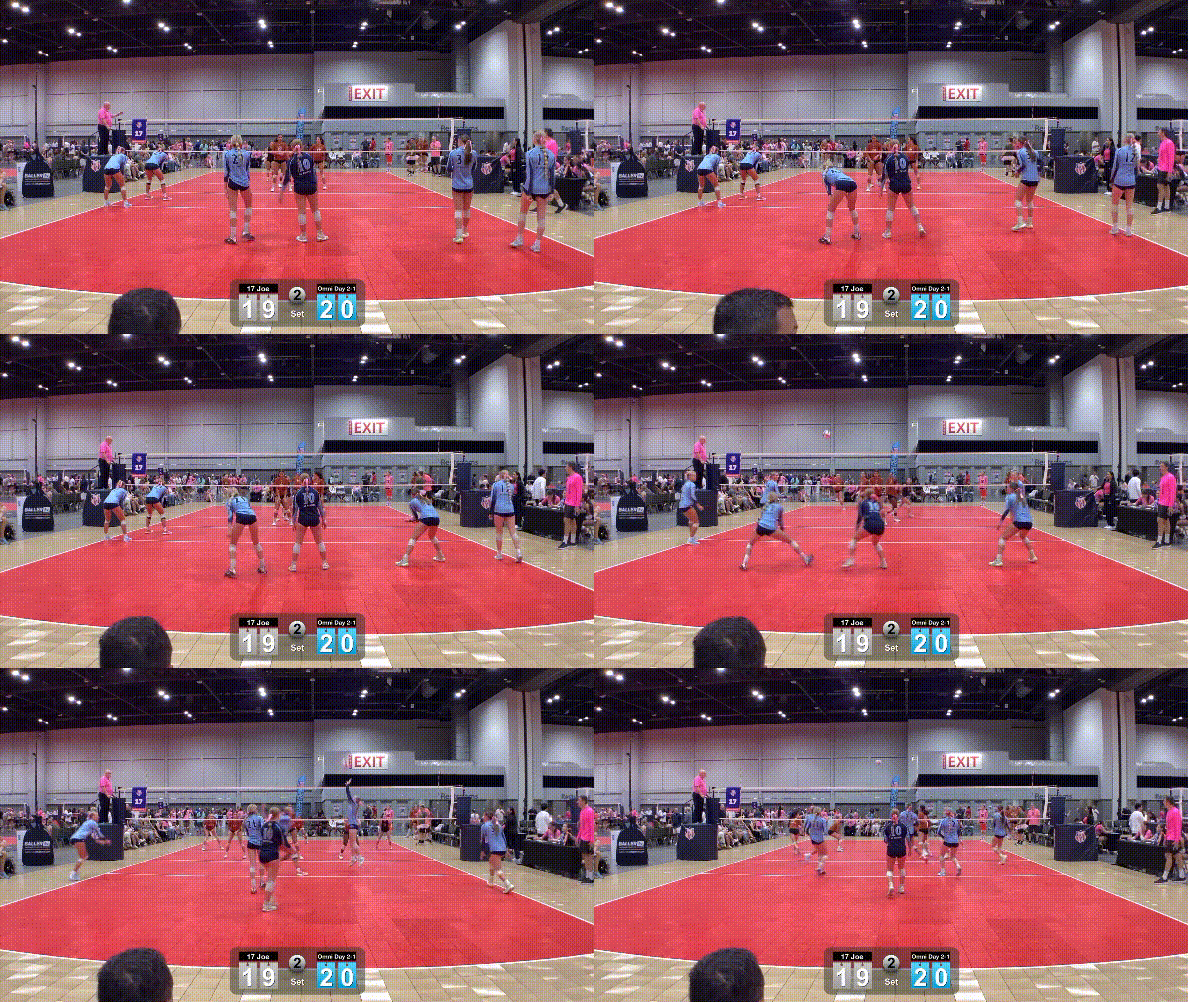
Here’s a clip from an early-season practice:
