
A lot of coaches generally accept the superiority of Whole Practice to Part Practice. Although it’s not uncommon to see your everyday coach doing Part Practice, those are mostly coaches who don’t attend coaching clinics or reading coaching literature. I would guess most SmarterVolley subscribers are firmly in the Whole Practice camp, as our most of the attendees at a GMS clinic, especially after we give our motor learning presentation:
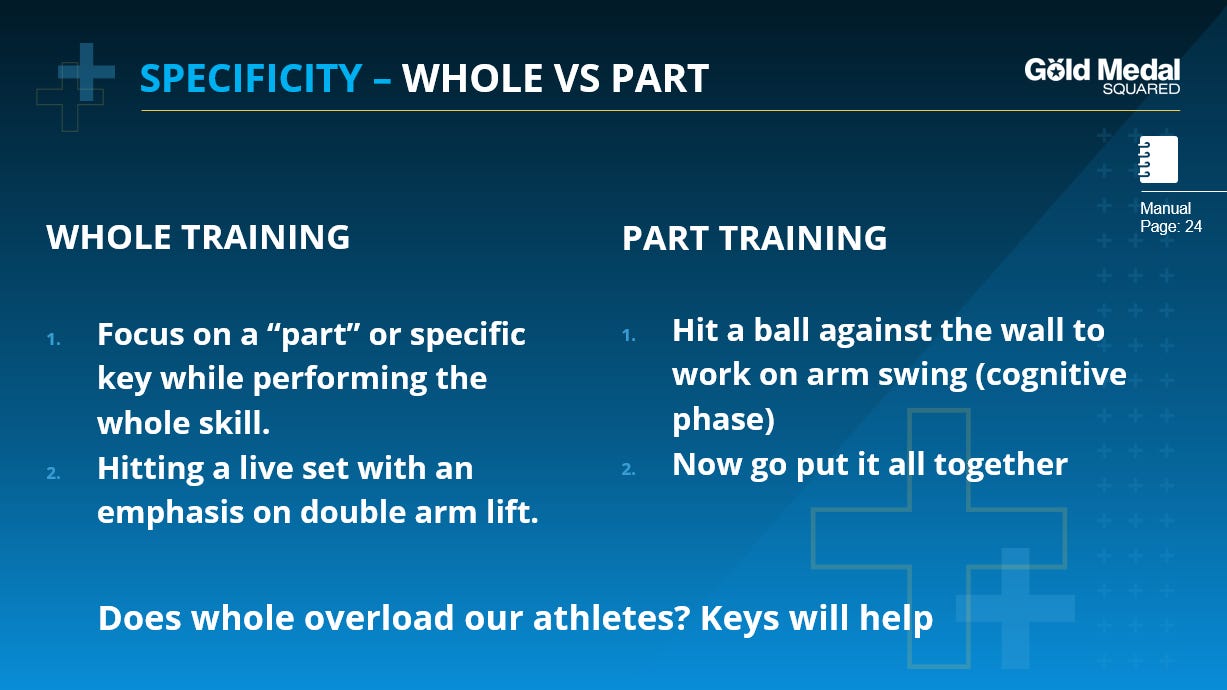
Yet, there’s some more nuance to it. Part Practice is less controversial in some non-coaching areas of applied motor learning. Even within coaching fields, not everybody is on the side of strictly Whole Practice. Here’s a PhD talking about Whole v Part practice and discussing some nuances.
So what is a coach to do?
Theory v Practice
Let me talk about Theory v Practice for a minute. First of all, let’s remember that theory has a scientific meaning different from the colloquial one. When people use the word “theory” conversationally (as in, “I have a theory about why that couple broke up,”) they mean, “an educated guess.” But scientifically, a theory is a well-supported explanation of how and why something happens that generates testable predictions. The Theory of Evolution or The Big Bang Theory are not educated guesses, they are articulated explanations that can then be tested. And not all theories end up holding up, some end up being incomplete, etc, etc.
Okay, so there are some important concepts in motor learning that end up producing theories. Coaches then need to take these theories and apply them to practice. Sometimes there are intermediary “coaches coaches” resources (like this newsletter) that attempt to explain how theory should be applied. But ultimately theory must be applied.
The big challenge to application of theory is that the theorists sometimes don’t understand application and the applicants don’t fully understand theory. Meaning, sometimes theorists will suggest an application that they would imagine follows their theory, but because they don’t totally understand practice application, it doesn’t really. Or, when practitioners don’t fully understand theory, they attempt to apply theory, but they misapply it.
Okay, what does all that gobbledygook mean?
First and foremost, it means The Map Is Not The Territory. When practitioners see a result in practice that doesn’t accord with theory, they should probably just believer their lying eyes and assume they don’t fully understand the theory. This is different than assuming the theory is wrong! That’s another sort of mistake. Let’s unpack them both:
Mistake #1: Coach has a practice method that seems to work well. It doesn’t match up with the article they read on Ecological Dynamics. “Oh, I guess that method didn’t really help. Time to abandon it.”
