
Why I Don't Spend Much Time Planning Practice
Planning is okay but practicing is better
I’m working on the next article in the SmarterVolley Systems series:
SmarterVolley Systems Series Articles
Push
Pull
Pull Part 2
Setter Entries
Timing
I sketched these series and wrote the backbone of them out in advance, but when adding gifs and clips I find I keep going down rabbit-holes of additional things to explain, which balloons the size of them. I’ll have the next article in what might end up being a 20-part series out soon.
In the meantime, here’s some thoughts resulting from a conversation between myself and another coach.
I Don’t Spend Much Time Planning Practice
Professional coaches (by that I mean coaches who coach for a living, not necessarily who coach professional teams) have a masochistic streak. Hours spent in the gym or the office are a badge of honor. Coaches love to talk about how busy they are. Sometimes it’s a mark of respect to assume somebody is busy. When people message me to talk volleyball, they often show me that respect by assuming I must be busy.
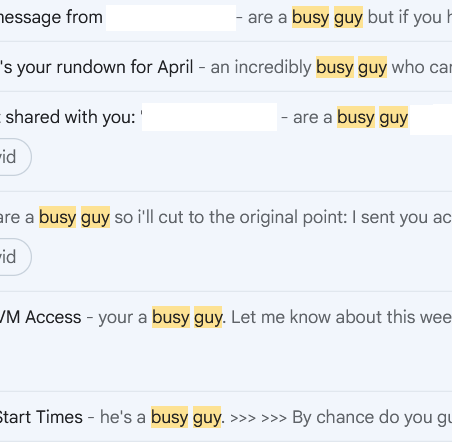
I’m not busy.
I’d like to think I’m fairly productive. I’d like to think I’m an organized planner and I prioritize and execute and get things done. But I’m rarely busy.
This is a bit of a semantic argument, so here’s the distinction I’m drawing:
Busyness is work done to keep up with the demands of the day. Busy tasks generally don’t generate lasting value.
Productivity generates lasting value that carries beyond completion of the task itself.
You have Practice, and Practice generates a task called Practice Planning. You can’t Practice without a Plan — or at least, you shouldn’t.
How Much Time Should You Spend Planning Practice?
When I was starting to learn how to coach, I once heard a coach (I’m pretty sure it was at a GMS clinic, and it might have been Carl) say that you should spend at least as long planning practice as you should actually practicing. John Forman says you should spend two hours planning for every hour practicing — but then kind of walks it back. I took this sort of advice to heart when I was a young coach… but it never seemed to click. One problem is that Practice Planning is more busy than productive. The other problem is that spending an equal amount of time planning practice is clearly unfeasible or counterproductive when taken to extremes. More on that later.
First, let’s go back to being busy vs being productive. When you’re a coach, the most productive thing you can do is to become a better coach. In order to become a better coach, you need to learn. Let’s think about some things that contribute to learning:
Immediate Feedback. This is probably the single most important factor in how well you learn anything. Do you receive clear, immediate feedback?
Iteration. This is the “reps” part of “reps and feedback.” Do you have an opportunity to iterate, meaning, “do the same thing a bunch of times in different ways and progressively move toward doing it better.”
Distributed Practice. Sometimes known as Spaced Repetition, we know that learning is best when you take X reps and distribute them over some number of opportunities, rather than cram them all into one learning session.
Interleaving. When you do one thing, and then do another thing, and then come back to the first thing, you tend to learn better than just doing the first thing every time.
Comparison and Transfer. It is very difficult to transfer skills across domains. Skill is very domain-specific. If you want any hope of transfer, you should probably be deliberately thinking about how what you’re doing right now could apply in other situations and what those situations might be.
Practice Planning scores low on these 5 concepts.
Feedback is delayed and perhaps non-existent. If you keep a coaching journal, you can write some observations from practice and gain some self-feedback on how well your practice plan went. Better than nothing, but not ideal.
Iteration. There is some learning in the practice planning cycle. You plan practice, you do practice, then you come back the next day and plan again. However, the cycle is slower than ideal. There’s ways to speed it up. More below.
On the other 3 dimensions, the standard “spend an hour planning today’s practice” often fails. On good coaching staffs, the planning meetings often last longer but facilitate discussions, brainstorm, film watching, etc. Those are all productive uses of time since they distribute and interleave coaching skills such as planning, coaching eye, decision-making, tactics, etc which means you’ll improve as a coach. Coincidentally, the more focused your practice planning session is, the less productive it is for you as a coach.
It’s Impossible To Spend That Much Time Planning…
… if you spend more of your day coaching. My first big jump as a coach came in my second and third years out of college, as a head coach. In particular, my third summer of coaching accidentally ended up being the greatest coach improvement laboratory ever constructed. For several straight weeks, my schedule was:
Monday - Friday Mornings: Run the day camp at a local middle school.
Monday - Thursday Afternoons: Personal training or private lesson clients.
Monday - Thursday Evenings: Run evening camp for the club
Saturday: Play grass or beach doubles
Sunday: Run skills clinics all day.
My Sunday sessions were particularly valuable as a coach. I ran 5 consecutive 90-minute sessions back-to-back-to-back-to-back-to-back. I could generally do them without taking any breaks, because having a bladder of steel is one of the most important coaching skills. These sessions alternated between hitting clinics and defensive clinics — 3 hitting and 2 defensive. Each session was split into four 15-minute stations plus a 30-minute competitive section. I generally had 4 coaches per session, which means that each coach got a station and you taught that content for 15 minutes and then the kids rotated and you got 4-6 new kids for the next 15 minutes. Then you coached something specific in the competitive section.
Coaching these sessions gave you immediate feedback, as coaching on the court generally does. A player tries something, you give them some instruction (or decide not to give instruction, or ask a question, or employ any of the other many tools in your coaching toolkit), and then try it again. Did your instruction help the player? Great, do more of that. Did your instruction not help? Okay, do less of that.
These sessions were iterated to the extreme. I not only taught the same concept to each player in a 4-to-6 player group, but we then switched groups and I did it again. And again. And again. Then there was interleaving as we switched to a defensive clinic. And then back to attacking — iterated as I just said. Then back to defense. Then back to hitting.
Most of the coaches in this session were hired for just 1 or 2 sessions, but my companion for every session was some guy from central PA named John Grossman. We spent several years where nearly every moment was spent coaching, playing, or talking about volleyball and importantly, coaching as many different players at many different levels. It’s no coincidence that two guys who never played Division 1 volleyball ended up coaching at the professional level. Most of the coaches I’ve talked volleyball with who have reached a high level had at least one summer (if not multiple) that they spent doing camps almost every day. Most of them will credit those hours in the gym with ordinary athletes as helping them become good coaches.
5 x 90-minute sessions is 7.5 hours. I could not have spent 7.5 hours planning these sessions — at least not without sacrificing more coaching. Say I removed 2 sessions and spent 3 hours planning the 3 remaining sessions, would I have been a better coach? I don’t think so. It’s possible that those 3 hours would have sharpened up and allowed me to create a slightly better plan for those 3 remaining sessions, but at the cost of me being slightly less proficient at actually coaching the sessions.
What if instead of removing 2 sessions, I removed 1 session, spent 1.5 hours planning and 6 hours coaching. Would I be better off? I think not. At almost any level of trade-off, more time spent coaching almost always makes you a better coach.
Always Be Planning
Of course, you probably shouldn’t just show up to the gym and wing it. You should plan. In fact, you should always be planning — just not always for the specific practice of that day. This is why I’m a big fan of templates. You should spend lots of time thinking about your practice templates. You should spend lots of time talking with other coaches about how they run Doubles or what 6v6 variations have been working well for them.
Earlier this year, I had the opportunity to join the WNT on the first leg of VNL. My return flight was a red-eye, so I spent about 45 minutes sleeping, about 15 minutes wiping the wine off my pant leg that the guy next to me spilled, and the other 12 hours sketching lineups. Not for the club team I was taking to Nationals in 2 weeks — but for hypothetical teams I might coach the next year depending on which age group and which kids came out for the team. I had a puzzle in my mind about how certain combinations of players could work together. How might I configure playing time combinations given X players who play Y positions and need Z playing time?
This was highly productive time in which no actual lineup was constructed, because the teams didn’t even exist yet, nor would they ever exist in exactly the combinations I imagined. Yet, precisely because I was thinking about hypothetical situations, my mind had the flexibility to imagine different solutions to the lineup puzzles I imagined. When it’s 3 hours before practice and you are planning for that practice specifically, you are much less likely to find solutions that will transfer and generalize after that day. You get tunnel vision by necessity.
On that same flight, I also spent some time imagining my pre-practice speed training setup. I was near the end of my club season, which meant I had a considerable amount of data to review. I reviewed what I had done that year and considered what I might tweak for the upcoming year. None of the solutions I came up with will be exactly what I’ll actually do this year, because this type of training is highly-dependent on your gym setup. Yet all of them were helpful because they strengthened my skill at devising speed training solutions for high school athletes with limited equipment and support staff. When it comes time to write out the specifics of the upcoming season, it won’t take long, because the previous solutions have been rattling around in my brain for months.
So How Much Time Do I Spend?
I almost never write practice on the day of, or even morning before. At most, I fill in the groups or make small tweaks due to player availability. I plan practices in blocks and I use the same general templates over and over again. A practice block like The First 12 Practices might take me about an hour to write, which is 5 minutes per practice. Add another 5 minutes to fill in the groups for the day or make small modifications if somebody is missing practice, and call it 10 minutes per practice. But I don’t usually do those modifications ahead of time. These days, I just do them as I’m writing up the board for practice.
However, I spend a lot of time thinking about practice! After my club tournaments this year, I typically spent most of the next day watching video, writing notes, sharing clips with coaching friends, and brainstorming ideas. To me, the time spent debating whether to do a serve and 1 bounce or a serve and 2 bounces and whether the bounces should be last-ball bounces or 2nd-ball bounces or transition hits at the setter is pretty much a waste of time. I have never yet met a coach who, at the end of the season, told me that they wish they could go back in time and tweak a few drills because it would have made a big difference in their team’s performance.
I have talked to coaches (and experienced this myself) who said things like:
“It took me too long to address this problem with that player and it never got resolved.”
“I didn’t realize her approach was so jacked up until…”
“We should have made that lineup change earlier.”
“We never got comfortable with [some tactic] and we couldn’t execute it against [some team].”
etc etc
Some of those problems are really hard to solve. Coaching is hard! If you are reading this, can you right now visualize the approach of every player on your team and tell me if any of those mechanics are limiting them? Figuring out which defensive tactics you’ll choose to train is a tough puzzle — you never have enough time and if you throw too much at your players, they won’t absorb it. Might there be a way you could teach it more efficiently?
Alright, I’ll bring this to a close now. Plan practice, but be way more efficient. Spend as much time in the gym as possible. Spend as much of the rest of your time thinking about volleyball.
This one really caught me by surprise Joe! I spend between an hour and an hour and a half getting ready for each practice. They first half of that I'm reviewing video and stats from our most recent matches and looking at my long term practice chart that Carll always told us to write and figuring out what the right things to focus on each practice are for each athlete and then trying to think through what activities with which constraints I'm going to use to get them the most opportunities possible to perform that skill area in context. Figuring out that matrix of athlete, activity and constraint (if a new / different one makes sense) is just a real thought puzzle - can take me 30-45 minutes sometimes. Then I write it up in my notebook and do all the random mixing of players to make sure everyone is competing against everyone with reasonable mixing. Which part of this are you short circuiting or avoiding so that you can get a solid plan in place fast?